


Content creation has gone from fun side hustle to full-blown industry.
As of 2026, the global creator market — reflecting monetization on YouTube, TikTok, and other digital platforms — was valued at $250 billion. For comparison, that’s roughly the same size as the entire global coffee market.
In any other industry worth a quarter of a trillion dollars, it’d be possible for investors to get a piece of the action. So, why can’t you invest in creators?


Today’s issue is on GigaStar, a company building the financial infrastructure to turn creators into an investable asset class.
Founded in 2022, GigaStar has already raised over $7 million for creators and distributed a total of $1.4 million to investors. Now, the company is raising capital to fund its next phase of growth.
Here’s what the rest of the issue has in store:
The creator market is bigger than you think. The US now has more creators than lawyers.
Creators require a unique investment model. That’s why GigaStar invented an entirely new type of asset.
There’s one asset class that’s surprisingly similar to the creator market. Hint: it involves picks, shovels, and shiny rocks.
Investors can participate in GigaStar’s journey. The company is currently raising its second community round on WeFunder.
Plus, insights from my conversation with Scott Kitun, GigaStar’s Chief Business Officer.
Read on for more — or click the link below to access the details of GigaStar’s raise.
This is an unpaid profile of GigaStar. Please see the end for important disclosures. Thanks!
The US Has More Creators Than Lawyers
Since the pandemic, the number of Americans working as digital creators has exploded.
Back in 2020, the number of full-time creators in the US was just 200,000. By 2024, that figure had reached 1.5 million — more than the number of lawyers in the United States.
In part, this trend is due to the fact that we’re all on the internet a lot more than we used to be. Increased attention means more monetization.
But it’s also due to the rise in creator-focused platforms. YouTube is the OG here, but platforms like TikTok, Patreon, Spotify, Twitch, and Substack have all made it more feasible to earn a living creating content.
And if there was any doubt that creators are now a serious industry, look at what’s happening at the top of the food chain:
MrBeast, who got his start on YouTube, now runs a holding company worth $5 billion.
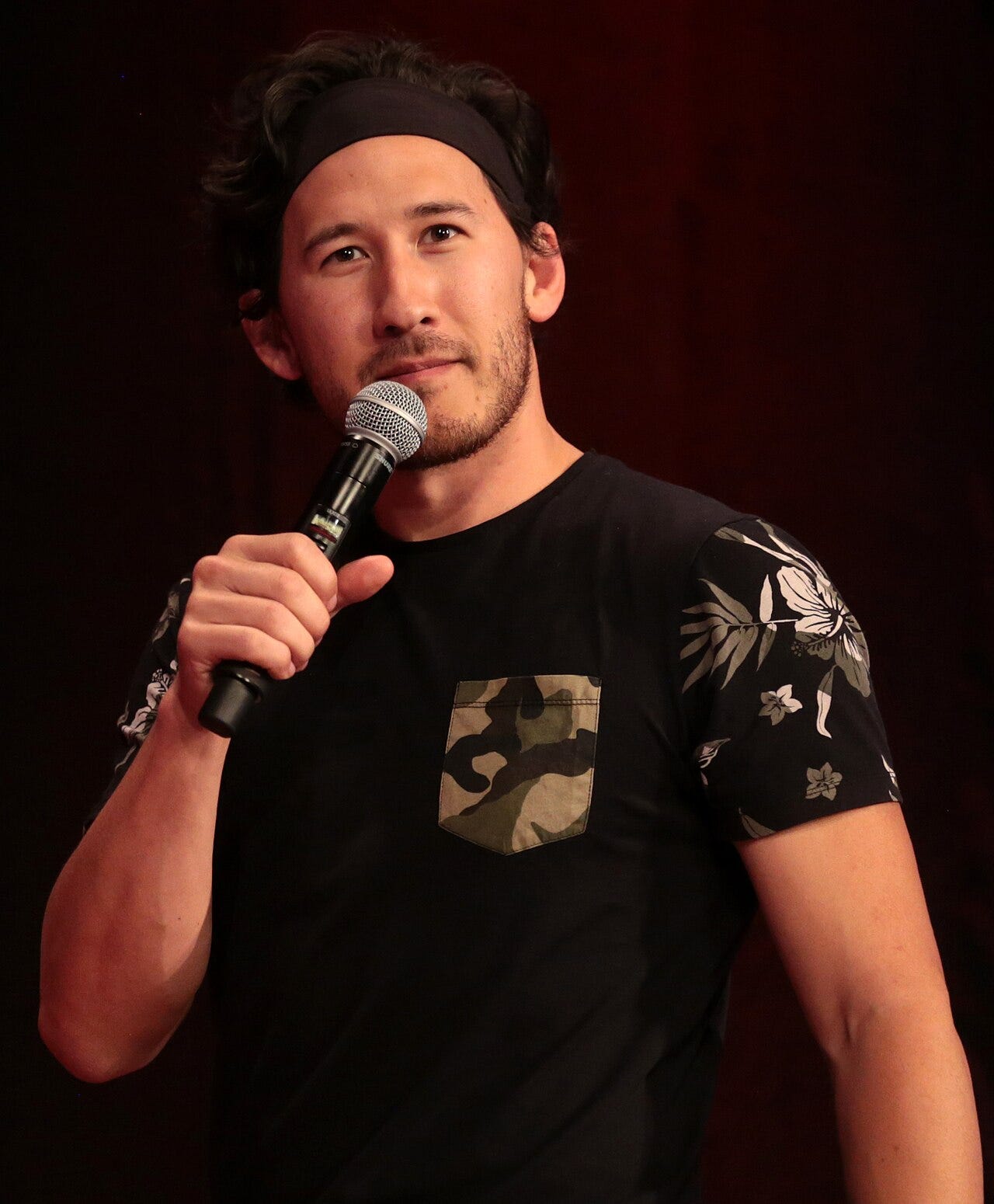
Markiplier, also a YouTuber, recently set a record for the biggest opening weekend for a self-distributed film with Iron Lung.
TikTok star Charli D’Amelio has launched apparel companies, snack brands, and also runs a venture capital fund.

The bottom line: creators are no longer just creators.
They’re increasingly building full-scale businesses that go beyond any single platform, leveraging their audiences for distribution and marketing.
Why Creators Need a New Investment Model
The creator market is worth an estimated $250 billion dollars. In nearly any other industry that size, it’d be possible for investors to participate.
But historically, investing in creators has been challenging.
The main reason why? Traditional investment models only tend to work for large, established creators:
Creator debt asks investors to lend against volatile platform cash flows without much in the way of assets to serve as collateral. Imagine a 20-year-old TikToker going to the bank for a loan — probably a tough sell!
Creator equity asks a creator to give up ownership in their business. But at an early stage, the creator is the business — and the very aspects that make their business successful (taste, charisma, authenticity, drive) are the things you can’t hand to an outside shareholder.


This is the market that GigaStar is focused on: creators who are building real businesses, but aren’t big enough yet for traditional financing.
How GigaStar Works: Creator Revenue Tokens
First launched in 2022, GigaStar sits at the intersection of financial infrastructure and the creator economy.

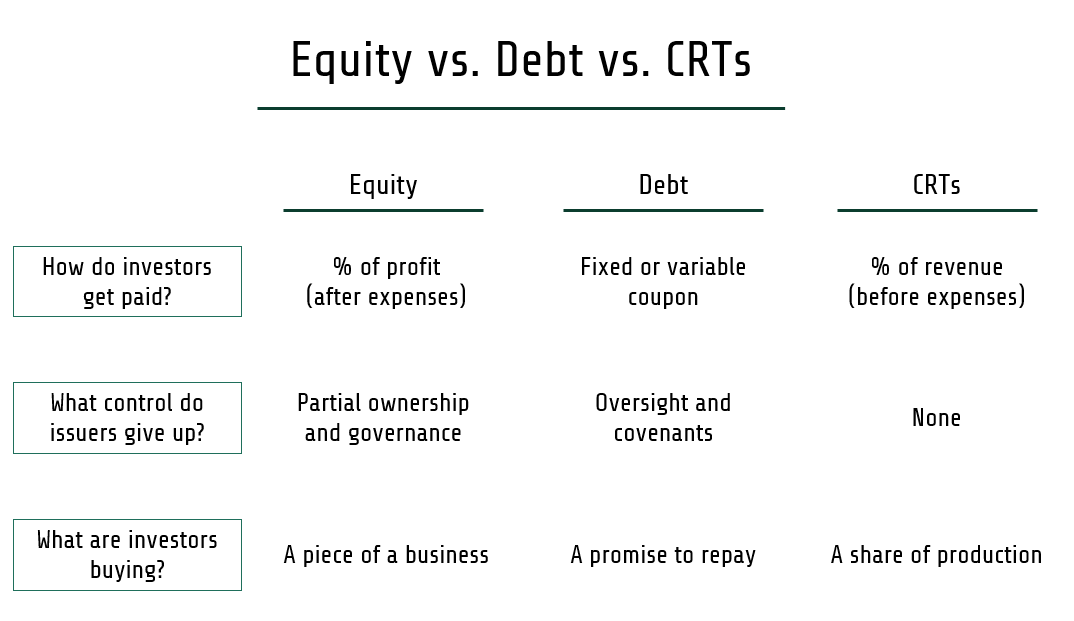
The company enables creators to raise capital by selling Creator Revenue Tokens (CRTs). These tokens are SEC-qualified securities issued through Regulation CF — and crucially, they’re neither equity nor debt.
Instead, CRTs function closer to a royalty model. Rather than earning interest or a cut of profits, investors are paid based on a creator’s gross revenue.
Suppose that a creator sells a 10% CRT token linked to their YouTube channel. If that channel generates $300,000 in a month, $30,000 gets distributed to investors.
In my view, the closest financial analogue to CRTs can be found in a surprising industry: mining.
Mining royalties are a $60 billion market that pays rightsholders based on a mine’s production output. (Music royalties are also similar to CRTs, but they tend to be valued based on historical output, rather than future potential).
By applying the royalty model to creators, GigaStar turns future revenue into present-day capital — without asking creators to give up ownership or burden themselves with debt.
Who’s Behind GigaStar?
GigaStar is being built by a team of operators who have already guided multiple startups toward successful exits.
The company is led by CEO Hazem Dawani, who has two previous exits, including co-founding and selling an options analytics firm for 8 figures. Other team members have logged exits to Robinhood and Disney. The firm also has institutional backing, having raised over $3 million in capital from venture firms.
Recently, I sat down with GigaStar’s Chief Business Officer Scott Kitun to discuss where the company is heading.

Today, GigaStar is exclusively focused on CRTs linked to YouTube channels.
Not only is YouTube the biggest creator monetization engine in the world, but the platform also makes it simple to verify channel revenue and calculate investor payouts.
But in the future, GigaStar is also looking at building CRTs for TikTok, Twitch, Beehiv, and more. Here’s what Scott had to say about why creators are looking for capital in the first place:
Creators raise capital for two reasons. The first is growth. Smaller creators are often looking to make their first hire so that they don’t have to do everything themselves. The second is diversification. Creators who rely on revenue from one platform often want to build a personal balance sheet that puts capital to work elsewhere (whether in the markets or their own ventures).
And this isn’t just a theoretical vision.
To date, GigaStar has already raised over $7 million in capital for creators through CRTs, showing that there’s demand on both sides of the market. The firm has also processed over $1.4 million in total payouts to the 8,600+ investors who have bought tokens.
Now, the question is whether GigaStar can turn that momentum into a sustainable business.
GigaStar’s Financials: Accelerating Revenue
GigaStar earns a one-time capital raising fee when a new creator offering closes. The company also earns a monthly platform fee (on a creator’s revenue) and a monthly administrative fee (on an investor’s payouts).
With these fees, GigaStar generated just under $550,000 in revenue in 2025 (according to the company’s audited financial statements). That’s up from about $350,000 in 2024, indicating genuine revenue acceleration.
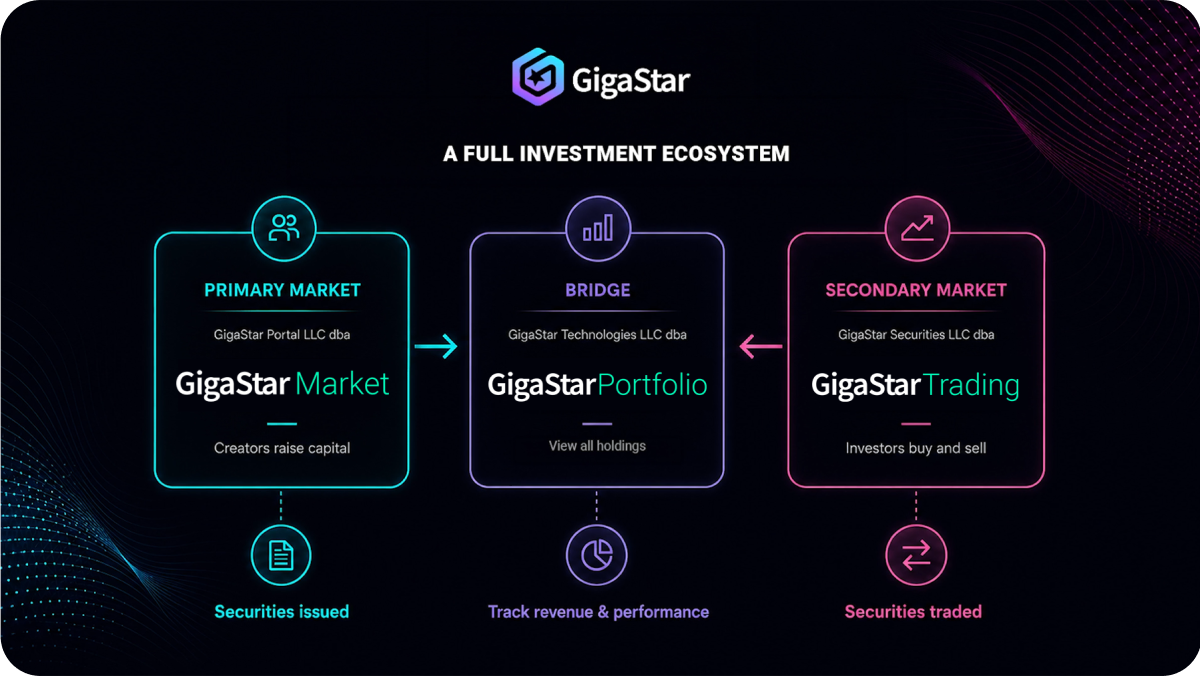
GigaStar has yet to turn a profit, showing a $3 million loss last year. But there’s a reason for that — the company says that it’s spent $3.9 million building out a secondary trading platform for CRTs, which it believes will be key to unlocking the next phase of growth:
The secondary trading platform will essentially function like a stock exchange, unlocking liquidity by allowing investors to trade existing tokens.
GigaStar is one of just 81 companies to have been approved by the SEC for an Alternative Trading System license — and the only one focused on the creator economy.
GigaStar’s trading market officially went live in July, with the platform already processing over $100,000 in trading volume.
Crucially, GigaStar also earns a cut of every trade that takes place on the secondary market, which could provide a healthy boost to revenue if volume grows.
Last note on the financials.
In 2025, GigaStar posted a gross margin of 72.5%, notching about $550,000 in revenue on $150,000 in cost of goods sold. And that gross margin has been expanding each year, indicating increasing efficiency at scale.
Having a healthy gross margin is what determines if growth can eventually cover operating expenses and lead to enduring profits — and GigaStar’s margin is solid.
To unlock that growth, GigaStar is currently raising capital via WeFunder in the company’s second community round.
GigaStar’s Raise: Live on WeFunder
GigaStar is currently raising a Reg CF investment round live on WeFunder — you can check out the details by clicking the link below.
GigaStar previously raised a community round in 2025 to help fund the platform’s buildout, reaching $4 million in investment faster than any other company on WeFunder that year. In 2026, GigaStar also raised an additional $652,000 through a private investment.
If you believe in the potential of the creator economy — and GigaStar’s potential to turn that market into an investable asset class — you can see GigaStar’s deal terms below.
Please perform your own due diligence before investing. All investing involves risk.
Closing Thoughts on GigaStar
GigaStar is pitching itself as the ‘Nasdaq of the creator economy.’ But in my view, the real pitch is a bit broader than that.
Unlike the Nasdaq, GigaStar isn’t just an exchange. The company is also an originator, an investment bank, a clearinghouse, a data analytics tool, and an asset manager.
In mature asset classes, all of these functions are separate. The fact that GigaStar is doing them all underscores just how novel the concept of treating creators like an asset class is. That novelty is both the risk and the opportunity.
The risk is that there’s really no track record for what GigaStar is doing.
Will there be genuine investor demand for CRTs that doesn’t depend on an existing audience relationship? Will the secondary market attract enough volume to be useful? What happens to a CRT when a creator burns out, pivots, or simply stops posting? None of these questions can be answered right now.
The opportunity is that if GigaStar can pull this off, the company won’t just be getting in on the ground floor of the market — they will be the ground floor of the market.
Thanks for reading,
Important Disclosures and Disclaimers
This is an unpaid profile of GigaStar. The author holds no equity, tokens, or other financial interest in GigaStar or any securities offered on its platform. No compensation was received or promised, and the author has no other business relationship with the company.
GigaStar reviewed an early draft of this article for factual accuracy. The company had no approval rights over editorial content, framing, or publication decisions.
This article does not constitute investment, legal, or financial advice. This article is not an offer or solicitation to sell securities, nor an endorsement of the securities discussed. All investing involves risk.